Monthly Archives: October 2022

Acne Scar Treatment in Shalimar Bagh

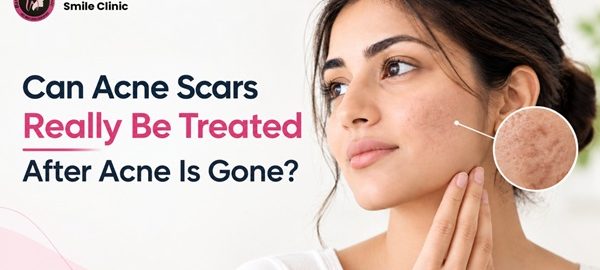
Acne Is Gone, But the Scars Are Still There: Can Acne Scars Really Be Treated?

Your acne may have settled months or even years ago, yet every time you look in the mirror you still see reminders of it.

For many patients, the frustrating part is that they have already tried creams, serums and home remedies without seeing much improvement.

The reason is simple:

Acne marks and acne scars are not necessarily the same thing.

Understanding this difference is the first step towards choosing an appropriate acne scar treatment in Shalimar Bagh.

Acne Marks vs Acne Scars 

After acne heals, it may leave dark or reddish marks.

These are colour changes in the skin and can sometimes gradually improve.

True acne scars involve changes in skin texture.

Some scars appear as narrow deep pits. Others are broader depressions, while some create a rolling or uneven appearance.

Because scar types differ, one treatment cannot be expected to work equally well for everyone.

Myth: One Cream Can Remove Deep Acne Scars 

Topical products may help certain pigmentation issues or improve overall skin quality.

But a cream cannot simply rebuild every type of deep structural acne scar.

Depending on the scar pattern, doctors may consider procedures designed to stimulate skin remodelling.

Where Does Microneedling Fit In? 

Microneedling devices create controlled micro-injuries in the skin, which stimulate the body’s natural repair process.

Advanced microneedling systems such as Dermapen may be considered for selected acne scars and skin-texture concerns.

But deeper scars or mixed scar patterns may require a combination approach.

Are Chemical Peels Useful? 

Chemical peels can be useful in selected situations, particularly where acne is associated with superficial pigmentation, uneven tone or certain textural concerns.

But expecting a superficial peel to erase deep scars can lead to disappointment.

The correct treatment depends on what type of scar is actually present.

Myth: Scrubbing Harder Will Remove Acne Scars 

Aggressive scrubbing may do exactly the opposite of what you want.

Excessive friction can irritate already sensitive or acne-prone skin and may worsen inflammation or pigmentation.

Skin improvement should be controlled, not aggressive.

Why Scar Assessment Matters 

Imagine two patients who both search Google for:

“acne scar treatment near me.”

One has mostly pigmentation.

The second has deep pitted scars.

Giving both patients the same treatment package simply because both describe their problem as “acne scars” would make little sense.

A proper skin examination helps identify the scar type before a treatment plan is chosen.

Can Acne Scars Disappear 100%?

Patients should be careful about absolute promises.

The goal of treatment is generally improvement in texture and appearance rather than guaranteeing completely flawless skin.

The degree of improvement varies with scar type, depth, skin characteristics, age of the scars and treatment response.

Acne Scar Consultation in Shalimar Bagh 

Bansal’s Skin & Smile Clinic lists acne-scar treatment, Dermaroller, peeling and skin-rejuvenation procedures among its skin services in Shalimar Bagh.

If acne is still active, controlling new breakouts can be just as important as treating old scars.

So rather than asking:

“Which acne-scar treatment is strongest?”

A better question is:

“What type of scars do I have, and what treatment suits them?”

Key Takeaways:

Acne marks and acne scars are different. Scar treatment depends on scar depth and type, and may involve microneedling, peels or combination treatment. Proper assessment is important because one treatment does not work equally well for all scars.

Frequently Asked Questions

  1. What is the difference between acne marks and acne scars?

Acne marks are usually changes in skin colour left after inflammation, while acne scars involve changes in skin texture. Marks may appear brown, red or dark, whereas scars may look pitted, depressed or uneven.

  1. Can acne scars be completely removed?

Acne-scar treatment generally aims to improve the appearance and texture of scars rather than guarantee complete removal. The level of improvement depends on scar type, depth, skin characteristics and treatment method.

  1. Which treatment is best for acne scars?

There is no single best treatment for every acne scar. Options may include microneedling, Dermapen, chemical peels and other procedures depending on whether the patient has pigmentation, shallow scars, deep scars or mixed scar patterns.

  1. Does Dermapen help with acne scars?

Microneedling devices such as Dermapen may help improve selected acne scars by stimulating the skin’s repair and remodelling process. Suitability depends on scar type and individual skin condition.

  1. Can chemical peels remove acne scars?

Chemical peels can help with certain superficial pigmentation and skin-texture concerns, but they may not be sufficient for deep structural acne scars. Deeper scars may require a different or combined approach.

  1. Should active acne be treated before acne scars?

In many cases, controlling active acne is important before or alongside scar treatment because continuing breakouts can create new marks and scars.

  1. Where can I get acne-scar treatment in Shalimar Bagh?

Bansal’s Skin & Smile Clinic in Shalimar Bagh provides consultations for acne, acne scars, pigmentation and other skin concerns. Treatment should be selected after identifying the type of acne scars present.
laser hair removal in shalimar bagh

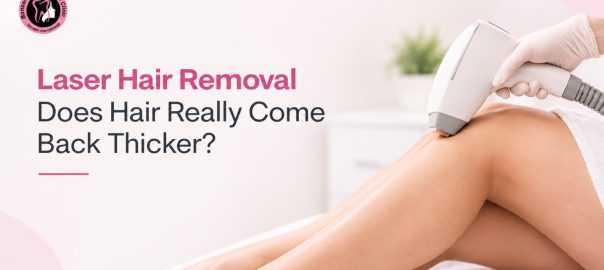
Laser Hair Removal: Does Hair Really Come Back Thicker? Myths vs Reality

Shaving every few days. Waxing every few weeks. Threading, razor cuts, ingrown hair and repeated salon appointments.

For people dealing with unwanted facial or body hair, the routine itself can become frustrating. That is why laser hair reduction has become a commonly considered option.

Yet many people interested in laser hair removal in Shalimar Bagh still hesitate because of things they have heard online.

Does laser make hair grow back thicker?

Can it damage the skin?

Is one session enough?

Let us separate common myths from medical reality.

Myth 1: Laser Hair Removal Makes Hair Grow Back Thicker

This is one of the most common misconceptions.

Laser treatment targets pigment within the hair follicle. Over a series of appropriately planned sessions, hair growth can progressively reduce and regrowing hair may become finer.

It does not intentionally make existing hair thicker.

However, results vary depending on factors such as the treatment area, hair colour and thickness, skin type, hormones and the technology being used.

Myth 2: One Session Permanently Removes All Hair

Hair does not grow at exactly the same time.

Laser works most effectively on hair follicles during a particular growth phase. Because different follicles are in different stages at any given time, multiple sessions are generally required.

This is why patients should be cautious about promises such as “100% permanent hair removal in one sitting.”

A more accurate term is often laser hair reduction.

Myth 3: Laser Hair Removal Is Only for Women

Not at all.

Men may seek laser reduction for areas such as the back, chest, shoulders, beard line, neck or ears.

Women commonly seek treatment for the upper lip, chin, face, underarms, arms, legs and bikini area.

The treatment plan should be decided according to the individual rather than gender.

Myth 4: Laser Treatment Is Extremely Painful

The sensation differs from person to person and depends on the area treated and the equipment used.

Many people describe it as brief warmth or a snapping sensation rather than severe pain.

Modern devices may incorporate cooling mechanisms to improve comfort.

Why Do Some Women Develop Facial Hair Again?

If unwanted facial hair is linked with hormonal factors, simply treating the visible hair may not address the underlying cause.

For example, significant or suddenly increasing facial hair can sometimes warrant medical evaluation.

This is one reason a consultation at a skin clinic in Shalimar Bagh can be more appropriate than choosing a treatment solely on the basis of an advertisement or package price.

Is Laser Suitable for Every Skin Type?

Laser parameters need to be selected according to skin tone, hair characteristics and treatment area.

That makes proper assessment important.

Recent tanning, certain medicines, active skin conditions and other factors may affect when or how treatment should be performed.

What Should You Ask Before Starting?

Before beginning laser hair reduction, ask:

  • Which technology is being used?
  • Is it suitable for my skin and hair type?
  • Approximately how many sessions may be required?
  • What precautions should I follow before and after treatment?
  • Could my hair growth have an underlying hormonal cause?

Looking for Laser Hair Removal in Shalimar Bagh?

Bansal’s Skin & Smile Clinic in Shalimar Bagh provides laser hair removal among its skin-treatment services.

The important question is not simply, “How cheap is the package?”

It is: Is the treatment appropriate for my skin, hair and underlying condition?

A personalised consultation can help answer that before treatment begins.
Key Takeaways:

Laser hair removal uses targeted energy to reduce unwanted hair growth. Multiple sessions are generally required, and results depend on hair type, skin type, treatment area and hormonal factors. Bansal’s Skin & Smile Clinic offers laser hair-reduction consultations in Shalimar Bagh, Delhi.


FAQs

  1. Is laser hair removal permanent?

Laser treatment is more accurately described as laser hair reduction. It can significantly reduce hair growth over a series of sessions, but some hair may regrow over time. Maintenance sessions may occasionally be required depending on hormones, treatment area and individual hair-growth patterns.

  1. How many laser hair removal sessions are usually required?

There is no fixed number for every person. Multiple sessions are generally required because laser works most effectively on hair that is in an active growth phase. The number of sessions depends on the treatment area, hair thickness, skin type, hormonal factors and response to treatment.

  1. Does laser hair removal make hair grow back thicker?

No. Properly performed laser hair reduction does not normally make treated hair thicker. Hair that regrows may become finer or lighter. If facial hair is increasing because of hormonal factors, the underlying cause may also need assessment.

  1. Is laser hair removal painful?

Most patients describe the sensation as mild warmth, tingling or a brief snapping feeling. Comfort levels vary by body area and individual sensitivity. Modern laser systems may use cooling mechanisms to improve comfort.

  1. Is laser hair removal safe for Indian skin tones?

Laser treatment can be performed on a range of skin tones, but device selection and treatment settings are important. A professional assessment is recommended before starting treatment, particularly for darker skin tones or recently tanned skin.

  1. Which areas can be treated with laser hair removal?

Common areas include the face, upper lip, chin, underarms, arms, legs, back, chest and bikini area. The suitability of an area should be assessed before treatment.

  1. Where can I get laser hair removal in Shalimar Bagh, Delhi?

Bansal’s Skin & Smile Clinic in Shalimar Bagh, Delhi offers laser hair-reduction services along with other skin and aesthetic treatments. A consultation can help determine whether laser treatment is suitable for your skin and hair type.